
آکادمی هوشمند – دانشمندان نیوزیلند: ریشه زبان انگلیسی به ایران باز میگردد – آکادمی هوشمند


یافتههای دانشگاهی در نیوزیلند نشان میدهد زبان انگلیسی به 8 هزار سال پیش در ایران بازمیگردد.
به گزارش گروه علم و پیشرفت آکادمی هوشمند به نقل از دانشگاه اوکلند، دانشمندان دانشگاه اوکلند کشور نیوزیلند به بازسازی پیدایش خانواده زبانهای هندواروپایی پرداختهاند.
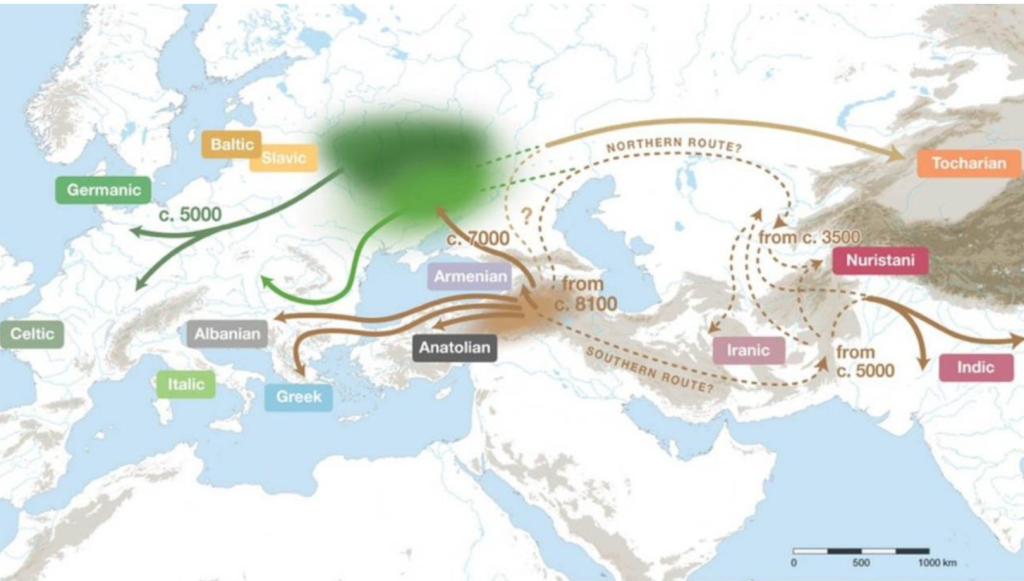
بر اساس این یافته ها ریشههای زبان انگلیسی را میتوان در حدود 8هزار سال بین کشاورزان ماقبل تاریخ در جنوب قفقاز در منطقه شرقی ترکیه امروزی و شمال غربی ایران جستجو کرد.
این دانشگاه نیوزیلندی اعلام کرده این بر اساس تحقیقات انجام شده از آلمان و با تکیه بر تخصص دانشگاه اوکلند به دست آمده است. این یافته پس از 200 سال بحث درباره زمان و مکان شروع خانواده زبان های هندواروپایی به دست آمده است.
بنابراین منطقهای از دریای مدیترانه تا خلیج فارس ممکن است جایی بوده باشد که برای اولین بار زبان نیا-هندو-اروپایی صحبت میشده است.
زبانهای هند و اروپایی پرتکرارترین خانواده زبانهای جهان هستند که تعداد آنها بیش از 400 زبان است و شامل انگلیسی، روسی، فرانسوی، گیلیک اسکاتلندی، هندی-اردو، بنگالی و پنجابی میشود.
یک تیم بین المللی متشکل از بیش از 80 متخصص زبان، گسترش واژگان اصلی را از 161 زبان هند و اروپایی، از جمله 52 زبان باستانی یا تاریخی، مانند لاتین و ودایی، تجزیه و تحلیل کردند. دانشمندان معتقدند روش آن ها داده ها و روش شناسی بهتری نسبت به مطالعات قبلی دارد. آن ها در یافته خود ذکر می کنند که زبان نیا-هندو-اروپایی حدود 8هزار و100 سال قدمت دارد و 7 شاخه اصلی آن در حدود 7هزار سال پیش از هم جدا شده اند.
این تحقیق که در مجله ساینس منتشر شده، ممکن است منجر به ارزیابی مجدد دو نظریه ای شود که قبلاً غالب بودند.
1-فرضیه «استپ» منشا این زبان را در حدود 6هزار سال پیش در استپ پونتیک-کاسپین، منطقهای که از بلغارستان، رومانی، مولداوی، اوکراین، روسیه و قزاقستان امروزی، نشان میدهد.
2-فرضیهٔ «آناتولیایی» منشا آن را در 8هزار تا 9هزار سال پیش و مناطق غربی ایران در نظر گرفته است.
تحقیقات جدید حاکی از آن است که زبانهای هندواروپایی در اطراف آناتولی که در گذشته بخشی از ایران بوده شروع و به سمت شمال به سمت استپ حرکت کردهاند که به عنوان موطن زبانهایی بود که در نهایت وارد اروپا شدند.
« راسل گری» یکی از نویسندگان اصلی این مطالعه و استاد دانشگاه اوکلند گفت: «بنابراین حل معمای 200 ساله زبان هند و اروپایی در ترکیبی از فرضیه های آناتولیایی و استپی نهفته است.»
University of Auckland scientists helped reconstruct the emergence of the Indo-European family of languages.

Professor Russell Gray
Origins of the English language can be traced back about 8,000 years to prehistoric farmers living south of the Caucasus in what is now eastern Turkey and north-western Iran.
That’s according to research led out of Germany and drawing on University of Auckland expertise. The finding comes after 200 years of debate about when and where the Indo-European family of languages began.
Northern parts of the so-called Fertile Crescent, a region hospitable for farming that curves from the Mediterranean Sea to the Persian Gulf, may have been where Proto-Indo-European was first spoken.
Indo-European languages are the world’s most-spoken family of languages, numbering more than 400 and including English, Russian, French, Gaelic, Hindi-Urdu, Bengali and Punjabi.
One of the study’s lead authors, Professor Russell Gray, of the Max Planck Institute for Evolutionary Anthropology in Germany, is also a professor at the School of Psychology at Waipapa Taumata Rau, University of Auckland. He described the findings as “robust.”
An international team of over 80 language specialists analysed the spread of core vocabulary from 161 Indo-European languages, including 52 ancient or historical languages, such as Latin and Vedic. Contributing from the University of Auckland were Dr Simon Greenhill in the School of Biological Sciences, Dr Remco Bouckaert in the Department of Computer Science and Professor Quentin Atkinson in the School of Psychology.
Proto-Indo-European is about 8,100 years old, with seven main branches already split off by about 7,000 years ago, according to the scientists, who claim better data and methodologies than previous studies.
The research, published in the journal Science, may lead to reassessments of the two theories which previously dominated the debate.
The “Steppe” hypothesis suggested an origin about 6,000 years ago in the Pontic-Caspian Steppe, an area running through today’s Bulgaria, Romania, Moldova, Ukraine, Russia and Kazakhstan.
The “Anatolian” or “farming” hypothesis suggested an origin 8,000-9,000 years ago tied to the dawn of agriculture in Anatolia, part of today’s Turkey.
The new research suggests Indo-European languages began around Anatolia and moved northwards onto the Steppe, which served as the homeland to the languages which eventually entered Europe.
“Ancient DNA and language phylogenetics thus combine to suggest that the resolution to the 200-year-old Indo-European enigma lies in a hybrid of the farming and Steppe hypotheses,” says Gray.
For the University of Auckland, the research was the third instalment in 20 years of work, which began with a 2003 paper by Gray and Atkinson in the scientific journal Nature.
“This really vindicates our earlier work,” says Atkinson. “The genes and the languages are telling us we were right to challenge the status quo Steppe origin theory.
Languages that derive from the same former ancestor language retain signals of that past origin, and of their divergence since then. By meticulously comparing the languages within a family it is possible
to reconstruct aspects of their common ancestor language.
scholaracademy.ir


پاسخها